Postpartum Itching Down There: Causes, Relief & When to Call
This article may contain affiliate links. This means that if you make a purchase through these links, we may earn a small commission at no additional cost to you. Learn more about affiliate links.
Of LITERALLY all the things people warn you about after birth, postpartum itching down there doesn't exactly make the highlight reel....😅
Bleeding? Yep. Soreness? Sure. The first postpartum poop? People have LOTS to say about that one.
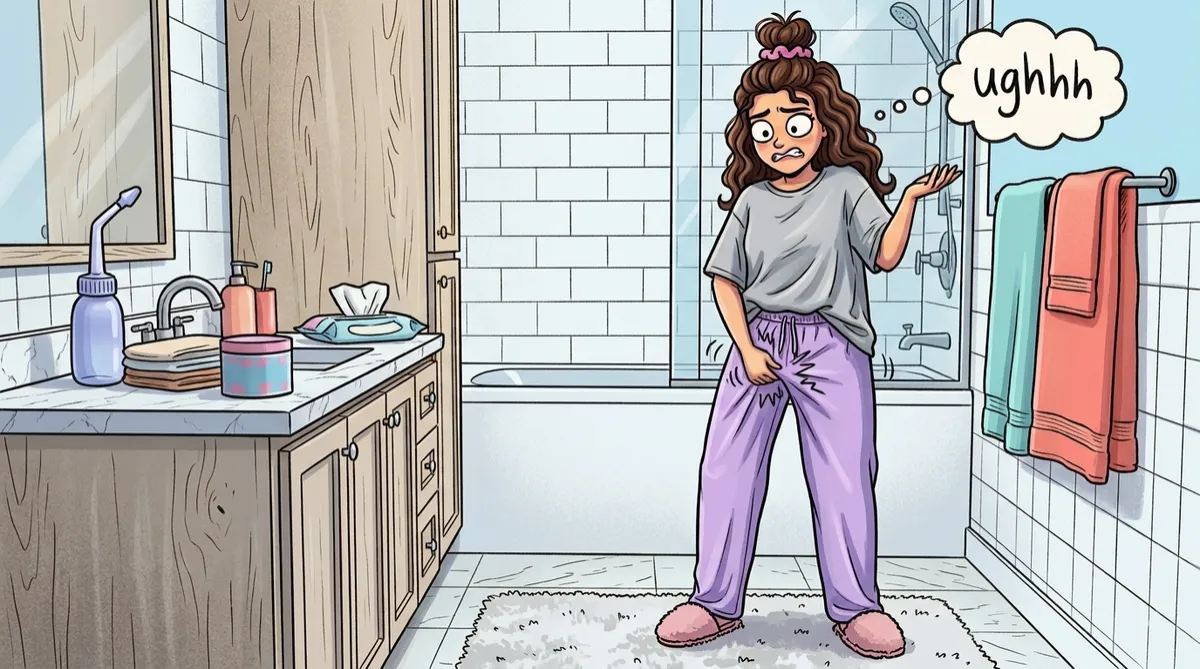
But then you're a few days into postpartum recovery and suddenly wondering why your vagina, vulva, stitches, perineum...or some combination of all of the above...is SO FREAKING itchy.
Postpartum itching can happen as your tissues heal after birth, especially if you had tearing or stitches. But itching can also come from irritation, hormonal dryness, or an infection, which means it's not something I want to automatically label as “normal” and send you on your way.
So let's talk about why you might be itching, what can actually help, and when the itching deserves a call to your provider.
In this Article
Is postpartum itching down there normal?
How to relieve postpartum itching
What causes postpartum itching down there?
Can you get a yeast infection after a C-section?
What about postpartum burning down there?
How long does postpartum itching last?
How to care for itchy stitches after birth
When should I call my provider about postpartum itching?
Is postpartum itching down there normal?
It can be.
After a vaginal birth, your vulva and perineum have been through quite a bit. The perineum is the area between your vaginal opening and anus, and it stretches significantly during birth. You may also have swelling, bruising, a tear, an episiotomy, or stitches healing in the area.
All of that healing can come with some weird sensations, including itching.
But there's an important distinction here: postpartum itching isn't always just healing.
If the itching is intense, getting worse instead of better, or happening along with things like worsening pain, redness, unusual discharge, a bad smell, fever, or other symptoms that don't seem right, I would call your OB or midwife rather than assuming it's part of postpartum recovery.
How to relieve postpartum itching
If the itching seems to be coming from routine postpartum healing or irritation, there are several things that can make your perineum significantly happier.
Use your peri bottle
[MLN-AMAZON:B09BRCLBRG]
If you gave birth vaginally, you probably met the peri bottle before you even left the hospital.
Fill it with warm water and gently spray your vulva and perineum while you pee and afterward. It helps clean the area without wiping irritated tissue, and spraying while you urinate can help dilute the urine so it stings less.
Then gently pat dry rather than rubbing.
This is one hospital freebie you should ACTUALLY use.
Try cold packs
[MLN-AMAZON:B07THDP4KZ]
Cold packs can help with postpartum perineal swelling and discomfort, particularly during the first few days after birth.
You can use a perineal cold pack or cold gel pack for short periods at a time. Make sure there's a layer between the cold pack and your skin rather than putting something frozen directly against your vulva.
Which feels like advice I shouldn't need to type, but postpartum desperation is real.
Related Reading: The Ultimate Guide to Postpartum DIY Padsicles (DIY or WHERE TO BUY!)
Try witch hazel pads
[MLN-AMAZON:B06ZYLFV8L]
Witch hazel pads are another common postpartum option, especially if you also have hemorrhoids.
They can provide a cooling sensation and may help soothe an irritated perineum. You can place them on top of your pad and replace them as needed.
Again, we're going for soothing here. If anything you put on the area makes the burning or irritation WORSE, stop using it.
Take a sitz bath
[MLN-AMAZON:B087WPH75N]
A sitz bath is basically a shallow warm-water soak for your perineum. You can use a small basin that sits over the toilet or, depending on your provider's postpartum instructions, soak in a clean bathtub.
Warm water can help soothe soreness and irritation while the area heals.
You do not need to turn the water into a postpartum potion with salts, essential oils, bubble bath, or approximately 14 herbs you found on TikTok.
Plain warm water is fine!
Try a numbing spray
[MLN-AMAZON:B073PBPC51]
Topical numbing sprays or creams are also commonly used for perineal discomfort after vaginal birth. You may have even received one at the hospital.
If you're using something like Dermoplast or another topical anesthetic, follow your discharge instructions or ask your provider which product they recommend and how they want you to use it.
More product is not automatically more relief, especially on already-irritated skin.
What causes postpartum itching down there?
There isn't one single cause, which is part of why this can get confusing.
Where you're itching, when it started, what other symptoms you have, whether you had a vaginal or C-section birth, whether you tore, whether you have stitches, and whether you're breastfeeding can all matter.
1. Healing after a vaginal birth
If you gave birth vaginally, your vulva and perineum may be swollen, bruised, tender, and generally VERY aware that something significant happened there.
Even if you didn't tear or need stitches, those tissues still stretched during birth and need time to recover.
If you did have a tear or episiotomy, there's additional healing happening. Minor tears can sometimes heal without stitches, while other tears require repair.
Healing tissue can feel itchy, tight, sore, or just...weird.
2. Postpartum stitches
If you have stitches from a perineal tear or episiotomy, you may notice itching around the area as it heals.
Your postpartum stitches are usually dissolvable, so you don't need to have them removed. But the tissue around them still needs time to heal, and that process can be uncomfortable.
Itching by itself is one thing. Itching with increasing pain, redness, swelling, drainage, or a SUPER bad smell is different (not to be confused with just smelly-postpartum-B.O. - THIS is quite normal) Those symptoms deserve a call to your provider because they can be signs that the area isn't healing normally.
And please do not scratch your stitches.
I realize that is deeply unhelpful advice when something itches. But still. Pls don't.🤪
3. Postpartum vaginal and vulvar dryness
Hormones can also be responsible for some of the itching.
Estrogen levels fall after childbirth, and they can remain lower while you're breastfeeding. That can cause vaginal dryness, but the irritation isn't necessarily limited to the inside of your vagina. The vulva can feel dry and irritated too.
You may notice itching, burning, irritation, or discomfort during sex once you've been cleared to resume it.
If dryness seems to be the problem, talk to your OB or midwife. There are treatments that can help, and you don't have to just wait indefinitely for your vagina to get its life together.
4. Irritation from pads, moisture, and postpartum bleeding
Then there's the very glamorous reality that you're probably wearing a pad basically 24/7 while experiencing postpartum bleeding.
Postpartum bleeding and discharge are called lochia. Add that to moisture, friction, pads, underwear, sweat, and already-sensitive skin, and irritation isn't exactly shocking.
Changing pads regularly, gently rinsing the area, and keeping things as clean and dry as reasonably possible can help.
This is also NOT the time to aggressively scrub your vulva or introduce a collection of scented feminine hygiene products. Your vulva does not need a spa treatment. It needs you to leave it alone a little bit.
5. Postpartum yeast infection
A yeast infection can happen during postpartum too. Yes....I know...like huh? REALLY BAD TIMING HERE.
Typical symptoms can include vulvar itching, redness, burning, and a thick white discharge. But symptoms of vaginal infections overlap quite a bit, and what looks like a yeast infection isn't necessarily one.
Bacterial vaginosis, sexually transmitted infections, skin irritation, and other conditions can cause similar symptoms.
So especially while you're newly postpartum, I wouldn't repeatedly treat yourself for a yeast infection based on itching alone. If you're not sure what you're dealing with, let your provider figure out what it actually is.
Can you get a yeast infection after a C-section?
Yep.
A C-section means your baby didn't pass through your vagina. It does not temporarily exempt your vagina from having vaginal problems.
You can still develop a yeast infection or experience vaginal/vulvar dryness and irritation after a C-section. You'll also still have postpartum vaginal bleeding because lochia comes from your uterus as it heals after pregnancy...it isn't caused by having a vaginal birth.
What about postpartum burning down there?
Burning is another symptom worth separating from itching because there are a LOT of reasons you might feel it after birth.
If you had a vaginal birth, urine passing over a tear, abrasion, or swollen tissue can sting like absolute hell during those first few days. A peri bottle with warm water can make peeing considerably less terrible.
Dry or irritated vulvar tissue can burn too.
But persistent or severe burning when you pee can also be a sign of a urinary tract infection or another problem. And burning accompanied by unusual discharge, odor, sores, significant redness, or worsening pain should be evaluated rather than automatically blamed on childbirth.
Basically, “I just gave birth” explains a lot of strange bodily experiences.
It does not explain ALL strange bodily experiences.
How long does postpartum itching last?
There isn't one exact timeline because the answer depends on why you're itching.
Postpartum swelling and perineal discomfort can last for a few weeks after a vaginal birth, and tears or episiotomies may take longer to fully heal. If itching is related to that healing process, I'd expect the overall trend to be improvement...not progressively worse itching.
Hormonal dryness can hang around longer, particularly if you're breastfeeding.
And if the itching is coming from an infection or another condition, waiting for some magical postpartum deadline to pass obviously isn't going to fix the underlying cause.
So I wouldn't get too attached to “this should be gone by exactly six weeks.” Pay more attention to what the itching is doing. Is it mild and gradually improving, or is it intense, worsening, or coming with other symptoms?
That distinction is much more useful.
How to care for itchy stitches after birth
If your stitches are what's driving you insane, the goal is mostly to support healing without irritating them further.
Keep the area clean, use your peri bottle, pat dry, change pads regularly, and follow whatever specific instructions your provider gave you when you left the hospital.
Avoid putting random products directly on the stitches unless your provider has said they're okay.
And while the stitches themselves usually dissolve, your tissue doesn't instantly heal just because the stitches are disappearing. Give the area time before resuming things like sex, tampons, or more strenuous activity, and follow your own provider's recommendations about when you're ready.
When should I call my provider about postpartum itching?
This is the part I really don't want buried.
Call your OB, midwife, or other healthcare provider if the itching is severe, worsening, isn't improving, or you simply aren't sure whether what you're experiencing is normal.
I would especially reach out if you have itching along with:
A fever of 100.4°F (38°C) or higher
Increasing rather than improving perineal pain
Redness or drainage around a tear, episiotomy, or stitches
Vaginal discharge with a bad smell
Significant swelling
Severe or persistent burning when you pee
Unusual vaginal discharge
Sores, blisters, or a rash
A tear or incision that seems to be opening
or basically anything else that makes you think, “Uhhh...this doesn't seem right.”
And...you do not need to diagnose yourself before calling. That's literally part of the reason your provider exists!
Postpartum itching is annoying, but the WHY matters
If your vulva or perineum is mildly itchy while everything is healing and the overall situation is steadily getting better, it may simply be one more deeply glamorous feature of postpartum recovery.
But don't assume every itch is healing just because you recently gave birth.
Pay attention to what else is happening, keep the area clean without aggressively messing with it, use the postpartum comfort measures that actually help, and call your provider when something seems off.
Because you already have enough going on with a newborn. You do not also need to spend three hours Googling whether your stitches are supposed to itch.
Although...I assume that's probably how you got here.
~Liesel
Want a little help through the rest of postpartum too?
My 12-Week Postpartum Series sends you one email each week with practical info about postpartum recovery, what might be going on with your body, and other things that are helpful to know during those first few months with a baby.
Related Reading: What Do You Do When Baby Is Screaming From Gas Pain?